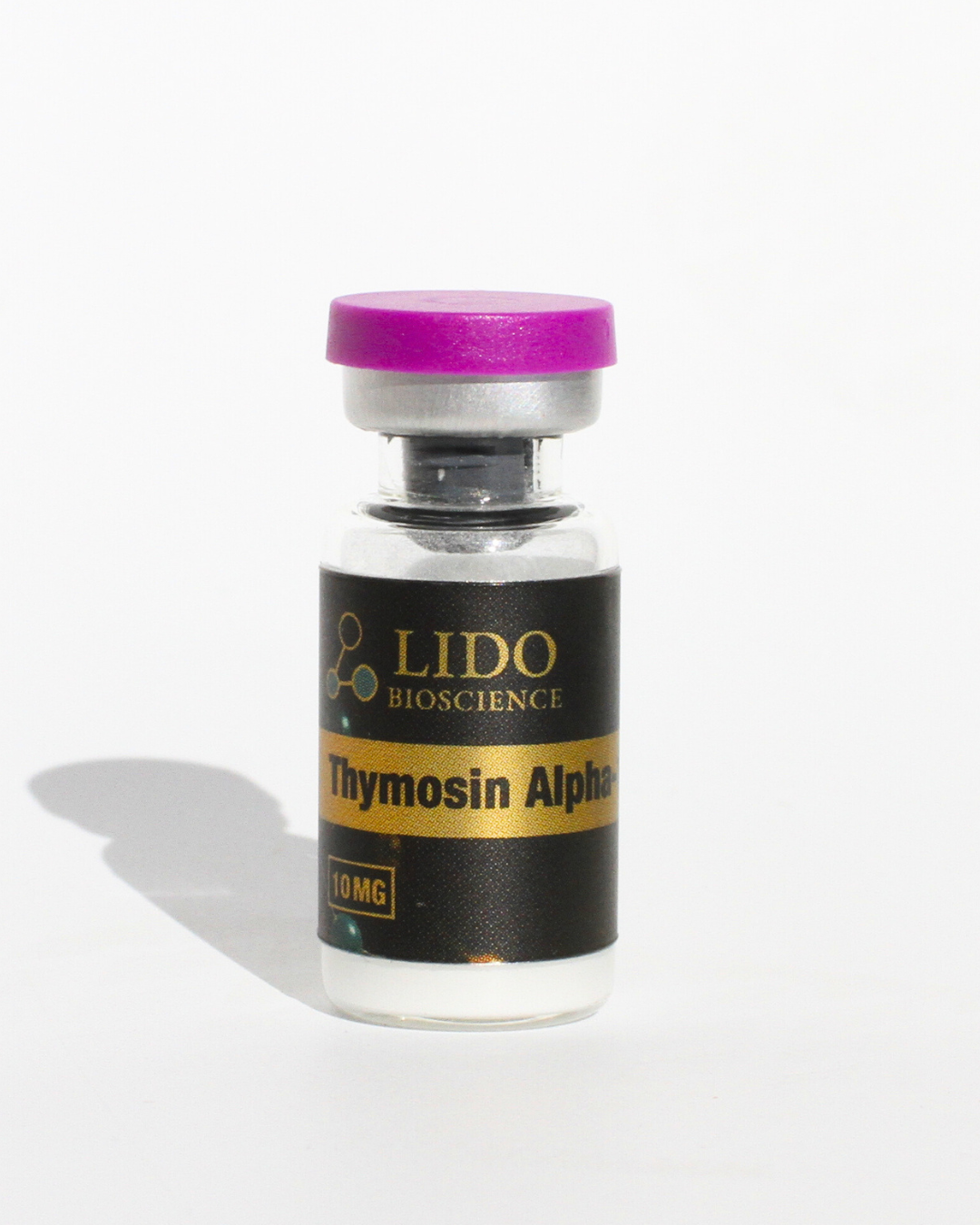
Thymosin alpha-1 is a 28-amino-acid peptide originally isolated from the thymus, the small immune organ in the upper chest that plays a central role in T-cell maturation. The peptide has been studied since the 1970s and has one of the longest research publication records of any immune-modulating peptide.
This guide walks through the mechanism, the major research contexts, and the molecular pharmacology.
Origin and structure
The thymus produces a number of biologically active peptides, collectively called thymic factors. Thymosin alpha-1 is one of the most-studied of these. The molecule was first isolated in the 1960s and 70s, sequenced, and then synthesized for research and clinical use.
The synthetic version is identical in sequence to the native peptide. The standard research formulation is the 28-amino-acid acetylated peptide as a lyophilized powder.
Mechanism: T-cell maturation and TLR signaling
The most-cited mechanism involves Toll-like receptor signaling, particularly TLR2 and TLR9. These receptors live on antigen-presenting cells and drive the activation of innate and adaptive immunity in response to pathogen-associated molecular patterns.
Thymosin alpha-1 appears to amplify TLR signaling without acting as a direct ligand. The downstream effects in animal models include increased T-cell maturation and differentiation, enhanced dendritic-cell function, and a shift in cytokine balance toward a Th1 response.
The peptide also has documented effects on regulatory T-cell populations, which become relevant in autoimmune research contexts where T-cell balance is the variable of interest.
Research contexts
The published literature on thymosin alpha-1 spans several distinct research areas.
Viral hepatitis research is the largest body of literature. The peptide has been studied in chronic hepatitis B and C, with most studies looking at viral clearance, sustained virologic response, and combination therapy with interferon. The molecule is approved for hepatitis treatment in a number of countries outside the United States.
Sepsis and severe infection research is the second major area. Trials have looked at the molecule as an adjunct in septic shock, where the immune-modulating effects appear to be relevant.
Oncology research has examined thymosin alpha-1 as an immune adjuvant in cancer treatment, particularly in immunocompromised contexts where T-cell function is the limiting variable.
Pharmacology
The peptide has a half-life of about two hours after subcutaneous injection. The short half-life is offset by the downstream cellular effects, which persist longer than the peptide itself.
The research literature has settled on subcutaneous administration as the standard route. Intramuscular and intravenous routes have been studied but show no clear advantage.
A note on framing
Thymosin alpha-1 is sold by Lido BioScience as a research peptide. The molecule is approved as a clinical therapy in a number of countries for specific indications, but the research-grade material is not the same as the approved formulation and is not for therapeutic use in this context.
Pregnancy, active cancer in some contexts, and immunosuppressed states are situations where a physician should weigh in before any human use.