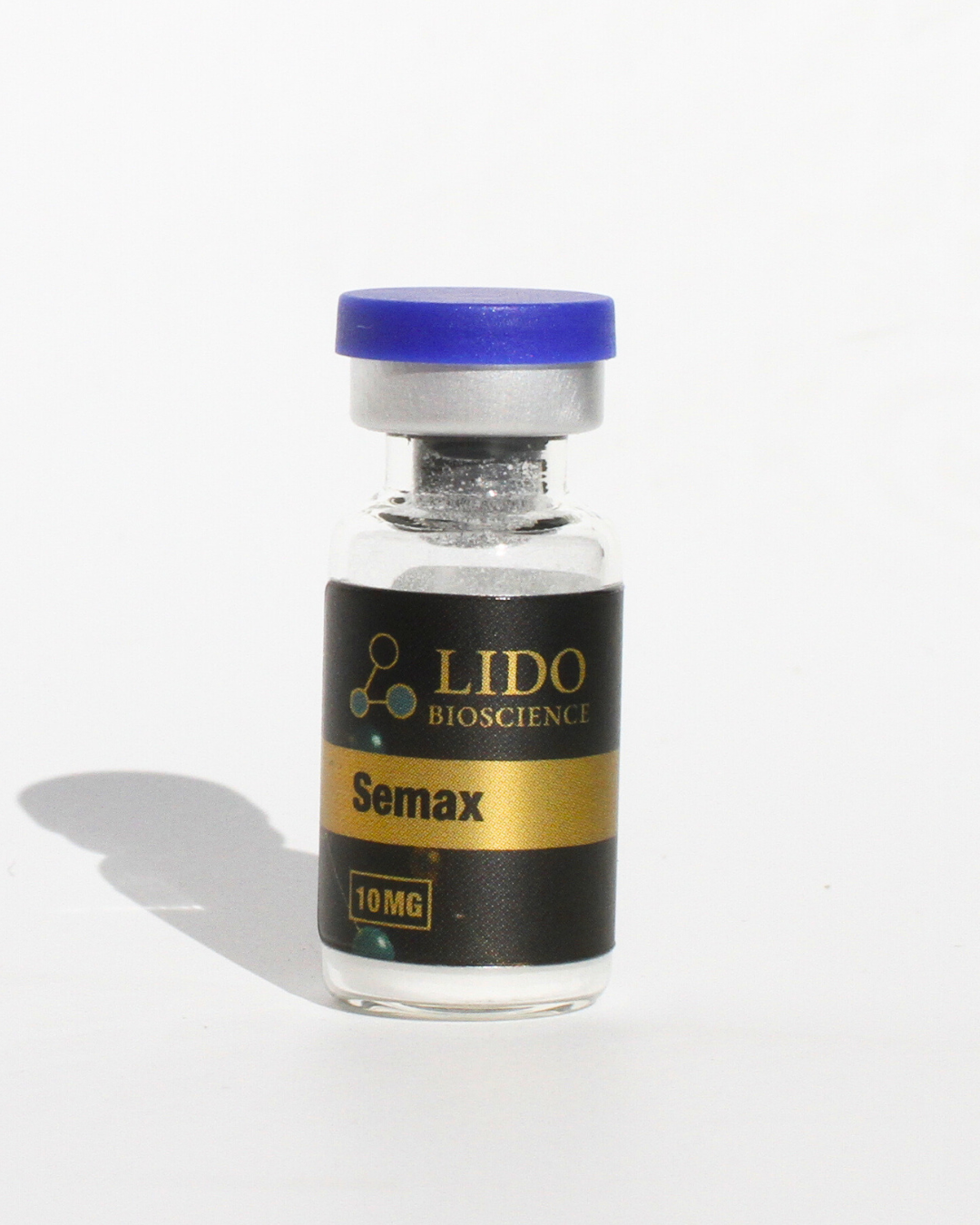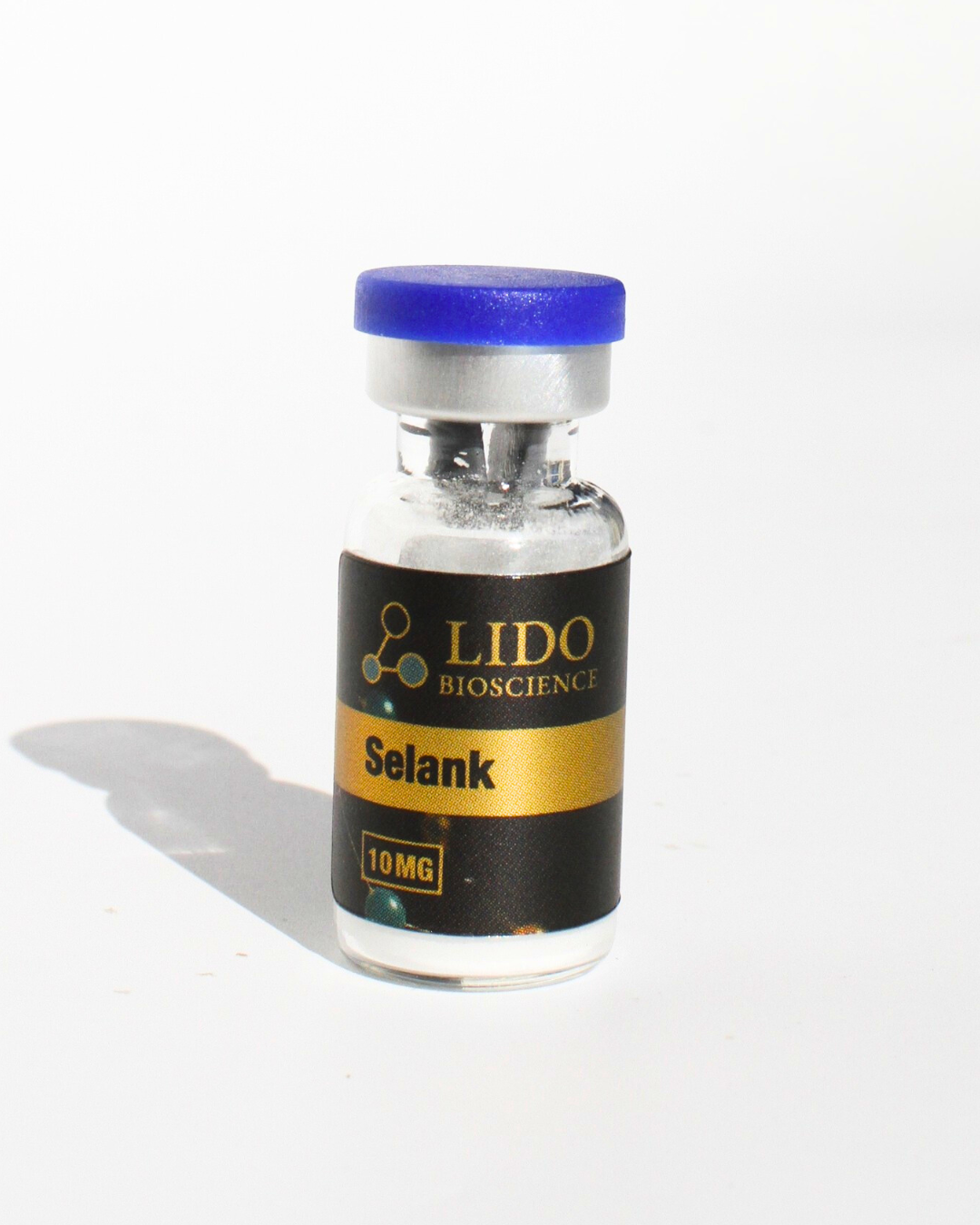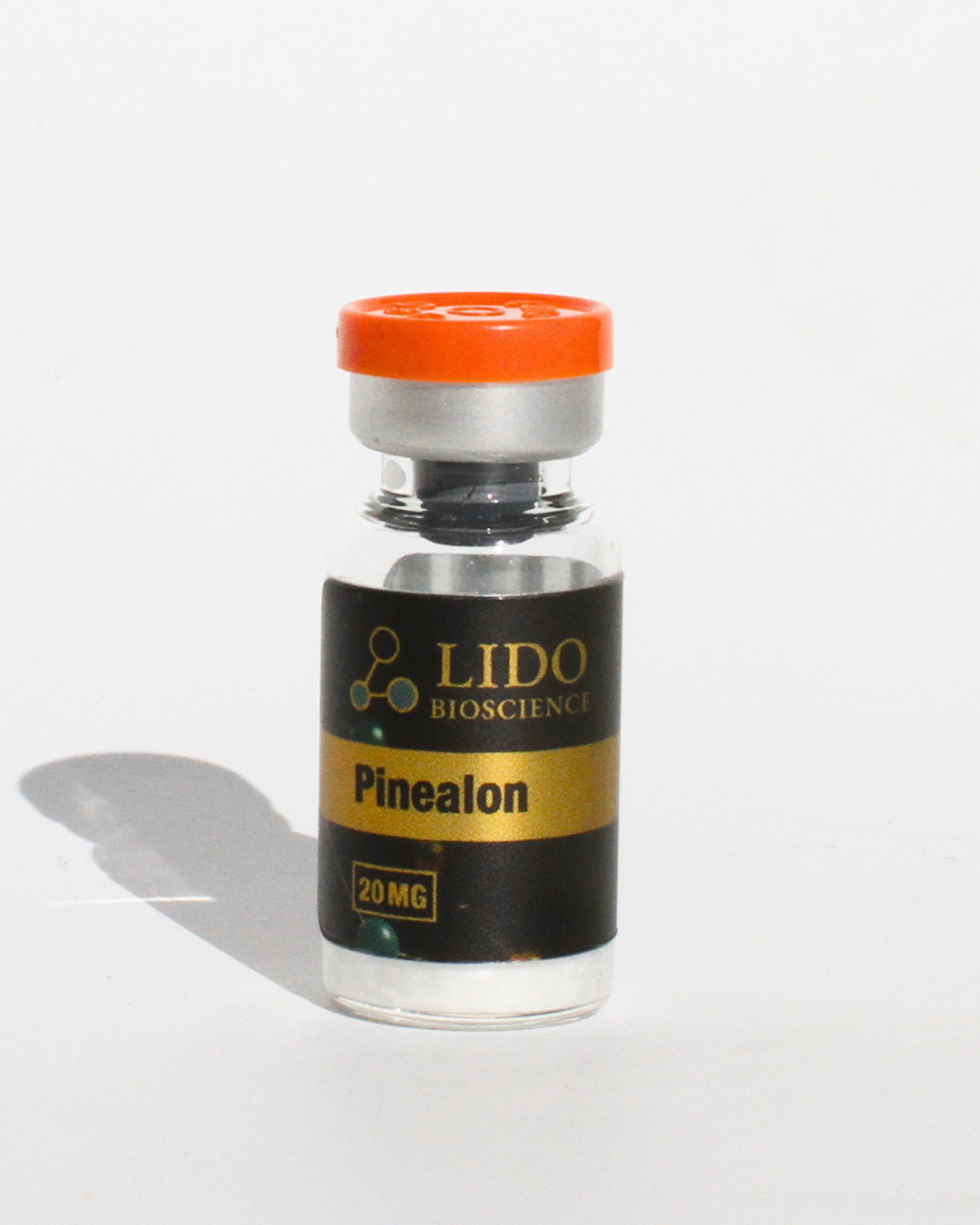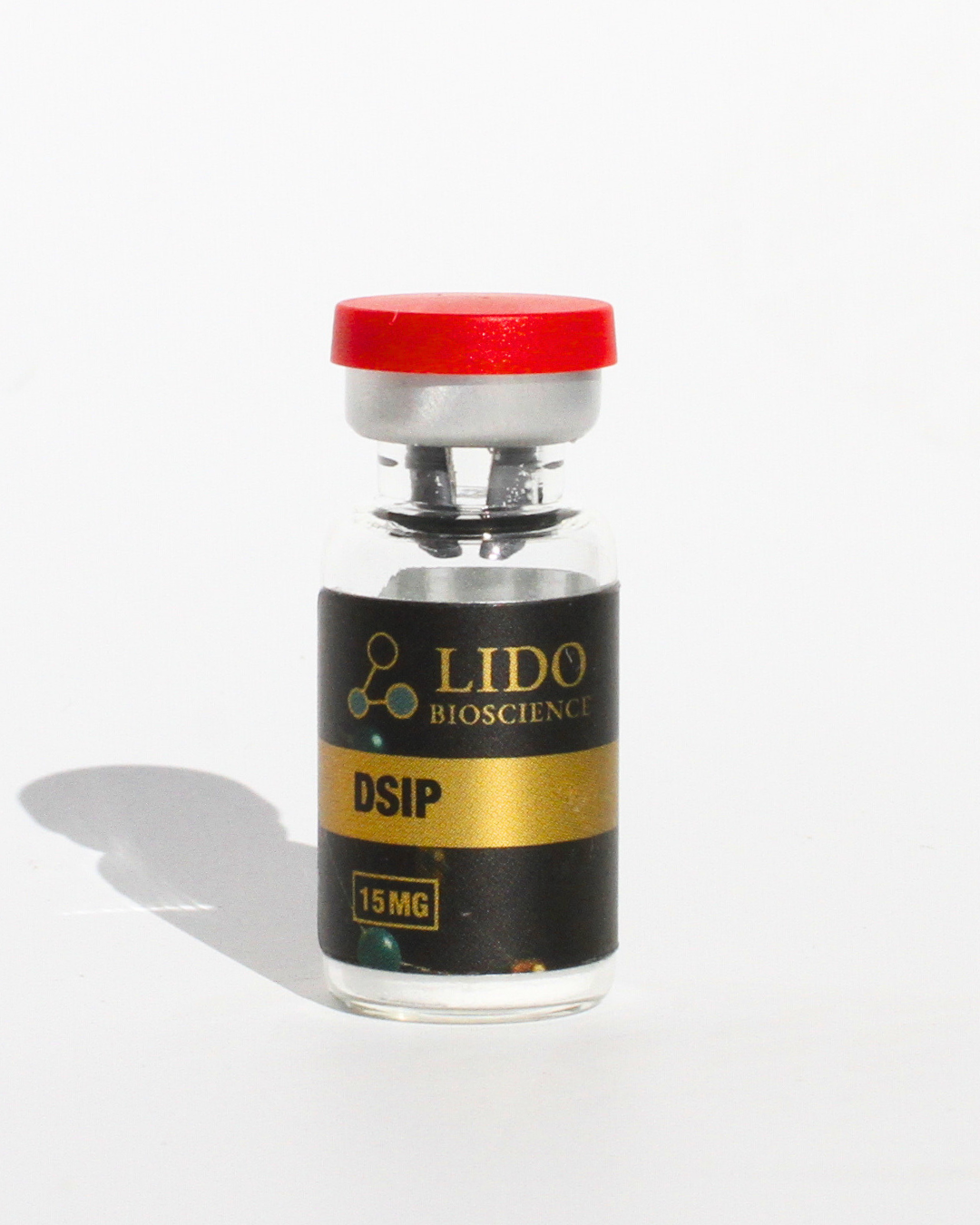
Several of the cognitive peptides in the Lido BioScience catalog have unusually long research histories because they were developed inside the Russian academic peptide research program in the 1970s, 80s, and 90s. The published literature is a mix of Russian-language clinical papers and more recent Western mechanistic work, which makes the field interesting to read into.
This guide walks through four of the most-studied molecules in the cognitive and mood space: Semax, Selank, Pinealon, and DSIP.
Semax: a synthetic fragment of ACTH
Semax is a 7-amino-acid peptide derived from a fragment of adrenocorticotropic hormone, or ACTH. The parent molecule is involved in the stress response, but the fragment Semax is built from lacks the hormonal activity and retains a different signaling profile.
The mechanism that has held up best across studies involves brain-derived neurotrophic factor, or BDNF. Semax dosing in animal models upregulates BDNF expression in the hippocampus and cortex, which is a well-established marker of neuroplasticity. The literature also reports effects on the dopaminergic and serotonergic systems, though those mechanisms are less cleanly characterized.
Semax has been used clinically in Russia for stroke recovery and cognitive impairment, with most of the studies published in Russian-language journals. Western mechanistic research is more recent and has focused on the BDNF pathway.
Selank: an analog of tuftsin
Selank is a synthetic analog of a naturally occurring peptide called tuftsin, which is a fragment of immunoglobulin G involved in immune signaling. The Selank molecule was modified to extend the half-life and shift the activity toward central-nervous-system effects rather than peripheral immune effects.
The mechanism that the literature best supports involves the GABAergic system. Selank appears to modulate GABA receptor activity without the side-effect profile of conventional benzodiazepines, which has made it interesting in anxiety research. Animal-model studies also show effects on cytokine balance and stress-response markers.
Like Semax, Selank has been used clinically in Russia, most often for anxiety disorders. The Western literature is mostly mechanistic and animal-model work.
Pinealon: a tripeptide from the pineal gland literature
Pinealon is a tripeptide consisting of glutamic acid, aspartic acid, and arginine. It comes out of a Russian research program at the Saint Petersburg Institute of Bioregulation and Gerontology that studied short peptides derived from organ extracts.
The proposed mechanism involves direct gene-expression effects. The hypothesis is that short peptides can cross cell and nuclear membranes and bind to specific DNA sites, modulating transcription of genes involved in neuronal maintenance. The mechanism is more speculative than the others in this section, but the animal-model work on cognitive and neuroprotective endpoints has been consistent.
Pinealon is most often studied alongside oxidative-stress and aging models in rodents.
DSIP: delta sleep-inducing peptide
DSIP, or delta sleep-inducing peptide, was first isolated from rabbit cerebral venous blood in the 1970s. The name comes from its initial discovery as a factor that increases delta-wave activity in sleep EEG recordings, though the actual mechanism is more complicated than the name suggests.
The peptide has been studied for sleep architecture, stress-response normalization, and opiate-withdrawal symptom reduction. The mechanism is not well-characterized at the receptor level. Most current research treats DSIP as a modulator of multiple systems rather than a single-target molecule, which is consistent with the breadth of endpoints in the literature.
The Lido BioScience catalog supplies DSIP as a 15mg vial.
Why these are studied together
Cognitive and mood research peptides target different parts of the same brain systems. Semax and Selank act on neuroplasticity and neurotransmitter signaling. Pinealon acts on gene expression in neuronal cells. DSIP acts on sleep architecture and stress-response circuits.
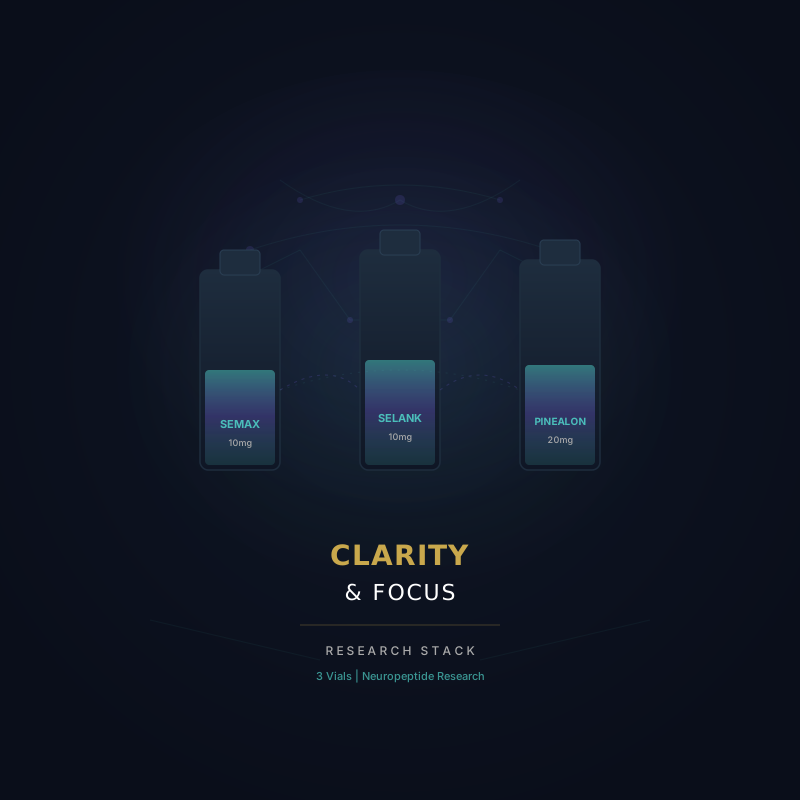
The Clarity and Focus stack in the Lido BioScience catalog combines Semax, DSIP, and Pinealon as a 12-week research framework that touches all three layers.
A note on framing
Every peptide in this article is sold by Lido BioScience as a research compound. None of them are approved medications in the United States. The Russian clinical history is part of the literature but does not substitute for FDA-track evidence.
If you are evaluating these compounds for any human use, a physician should weigh in. Cognitive and mood endpoints are particularly sensitive to context, comorbidities, and concurrent medications.