Obesity affects hundreds of millions of people worldwide and raises the risk of heart disease, type 2 diabetes, and a range of other conditions. Finding pharmacological tools that move the needle on body weight while also improving broader metabolic health has been a major focus of clinical research for decades.
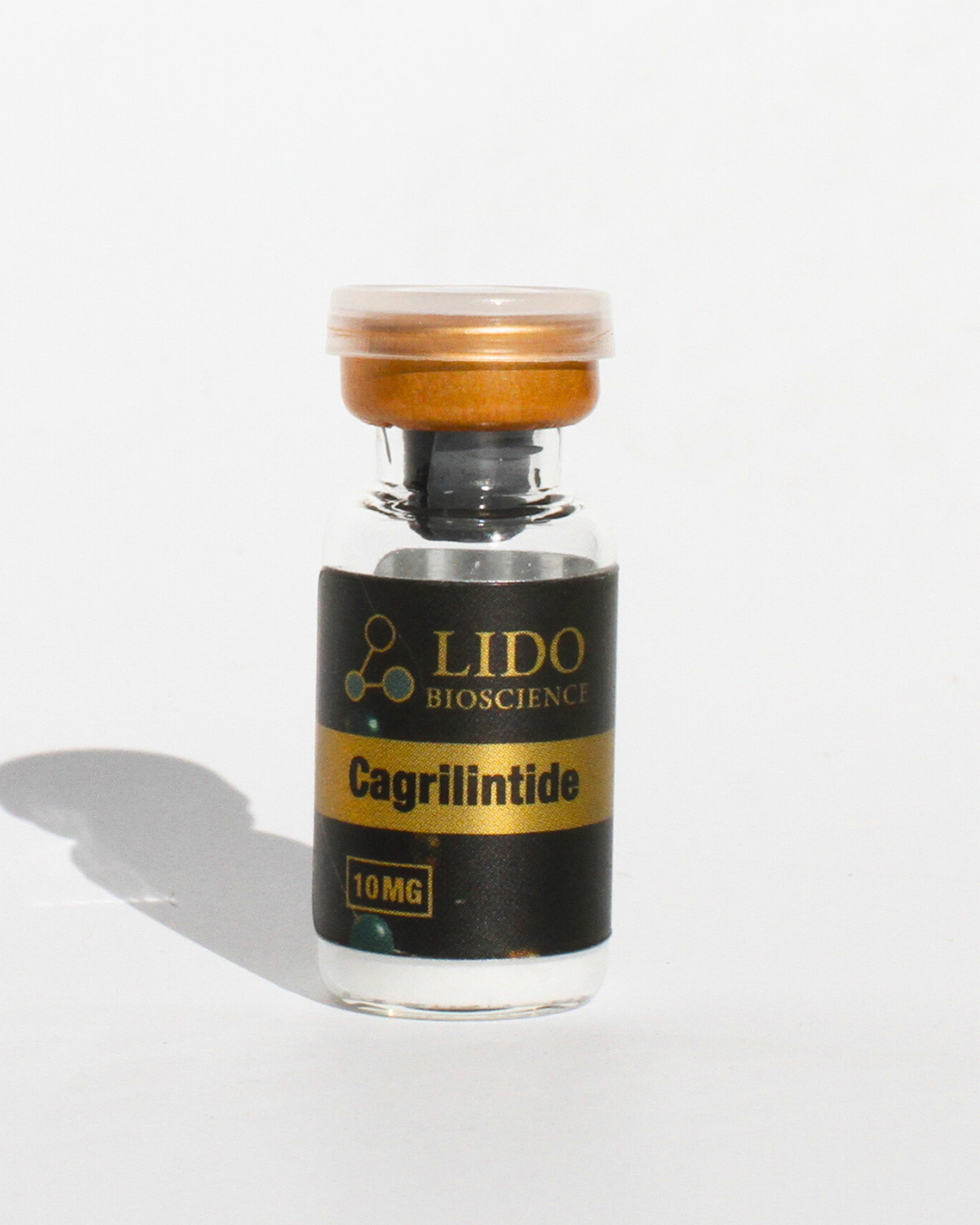
One relatively new area of interest centers on amylin, a hormone the pancreas releases alongside insulin after meals. Amylin plays a role in signaling fullness and slowing how quickly the stomach empties. Cagrilintide is a long-acting synthetic analogue of amylin, meaning it is designed to mimic amylin's signaling effects but remain active in the body far longer than the natural hormone.
A 2026 systematic review and meta-analysis published in the Journal of Diabetes and Metabolic Disorders pulled together the best available randomized controlled trial data on cagrilintide, both on its own and combined with semaglutide, a glucagon-like peptide-1 receptor agonist. The combined formulation is often called CagriSema in the research literature. Here is what the analysis found.
How the analysis was structured
The research team followed the PRISMA 2020 reporting guidelines and used the AMSTAR 2 framework to evaluate the quality of included studies. These are standard methodological checklists that help ensure a meta-analysis is rigorous and reproducible.
To be included, a study had to enroll adults with overweight or obesity, randomly assign participants to cagrilintide or CagriSema versus placebo, and report at least one efficacy or safety outcome. Four randomized controlled trials met those criteria, together enrolling 5,023 participants. Risk of bias in each trial was assessed using the Cochrane RoB 2 tool, a widely used instrument for evaluating how well a study was designed and conducted.
The primary outcome the team measured was percent change in body weight from baseline. Secondary outcomes included absolute weight change in kilograms, waist circumference, blood pressure, glycated hemoglobin (HbA1c, a marker of average blood sugar over roughly three months), and safety data. The team used random-effects meta-analyses, a statistical approach that accounts for variation across studies rather than assuming all trials measured the same underlying effect.
Body weight findings
Across the pooled trials, cagrilintide alone produced a statistically significant reduction in percent body weight compared with placebo. The mean difference was approximately 6.08 percentage points, with a 95 percent confidence interval ranging from about 4.14 to 8.02 percentage points. In plain terms, participants receiving cagrilintide lost, on average, roughly six percent more of their body weight than those receiving placebo.
The CagriSema combination also produced a statistically significant reduction in percent body weight, with a mean difference of roughly 5.98 percentage points compared with placebo, though the confidence interval for this estimate was wider, spanning from about 1.32 to 10.64 percentage points. The wider interval reflects greater variability across the trials studying the combination.
Both cagrilintide alone and CagriSema also produced significant reductions in absolute body weight, meaning the results were consistent whether researchers measured outcomes as a percentage or as actual kilograms lost.
Cardiometabolic marker outcomes
Beyond the scale, researchers tracked several markers that relate to cardiovascular and metabolic health. Waist circumference is a practical proxy for abdominal fat, which carries particular cardiometabolic risk. The meta-analysis found that CagriSema produced a statistically significant reduction in waist circumference, while the data for cagrilintide alone on this measure were less definitive.
For blood sugar control, CagriSema showed a significant reduction in HbA1c. This finding is notable because semaglutide, the second component of CagriSema, is itself known to affect glucose regulation, so the combined effect on HbA1c likely reflects contributions from both molecules. Cagrilintide alone, by contrast, showed modest improvements in blood pressure without producing a statistically significant effect on glycemic markers in this pooled dataset.
The blood pressure signal from cagrilintide alone is an early finding worth tracking in future, larger trials. Elevated blood pressure is a major risk factor for heart attack and stroke, so even modest improvements in that measure have potential population-level relevance.
Safety and tolerability
The meta-analysis also examined how well participants tolerated these treatments. Overall adverse events were reported more frequently in the active treatment groups than in the placebo groups, which is a common finding in trials of pharmacologically active agents versus inactive comparators.
Importantly, discontinuation rates, meaning the proportion of participants who stopped the treatment early because of side effects or other reasons, were comparable between active treatment and placebo. That alignment suggests the side effect profile did not cause participants to leave the studies at meaningfully higher rates than those receiving a sugar pill, which researchers generally interpret as a favorable tolerability signal.
The review notes this as consistent with an acceptable tolerability profile, though it also flags that longer-term and larger-scale safety data will be important for a fuller picture. Four trials represent a solid foundation for a meta-analysis, but the field is still accumulating evidence across broader and more diverse populations.
What makes cagrilintide mechanistically distinct
Most readers familiar with weight-related research have heard about GLP-1 receptor agonists, which work by mimicking a gut hormone that signals fullness and slows gastric emptying. Cagrilintide works through a different pathway, acting on amylin receptors rather than GLP-1 receptors.
Amylin is co-secreted with insulin from pancreatic beta cells after a meal. It acts in the brain, particularly in areas that regulate appetite and energy balance, to reduce food intake and slow the delivery of nutrients from the stomach to the small intestine. Because cagrilintide targets a distinct receptor system, combining it with a GLP-1-based compound like semaglutide may engage complementary mechanisms simultaneously, which could explain why the combination showed effects on a broader range of outcomes including both weight and HbA1c.
Early data points at dual-mechanism approaches as a productive direction in metabolic research, and the literature suggests this kind of complementary pairing has become an active area of investigation.
Limitations and open questions
The authors are clear that this meta-analysis, while rigorous, rests on four trials. The confidence interval for the CagriSema weight outcome was notably wide, which reflects real variability across the included studies and means the true average effect could fall anywhere within a fairly broad range.
The pooled population consisted of adults with overweight or obesity, but differences in baseline characteristics, diabetes status, trial duration, and dosing protocols across the four studies could all introduce noise into the estimates. Longer-term trials with more diverse populations will be important for understanding whether these early outcomes hold up.
The analysis did not examine outcomes in children or adolescents, and cardiovascular event data, rather than just risk-factor proxies like blood pressure and HbA1c, remain a gap in the cagrilintide literature. Those longer-horizon outcomes typically require much larger trials run over several years.